
Myelopathy
Myelopathy can affect walking, balance, coordination, hand function, and strength due to compression of the spinal cord.
Understanding the condition
What is Myelopathy?
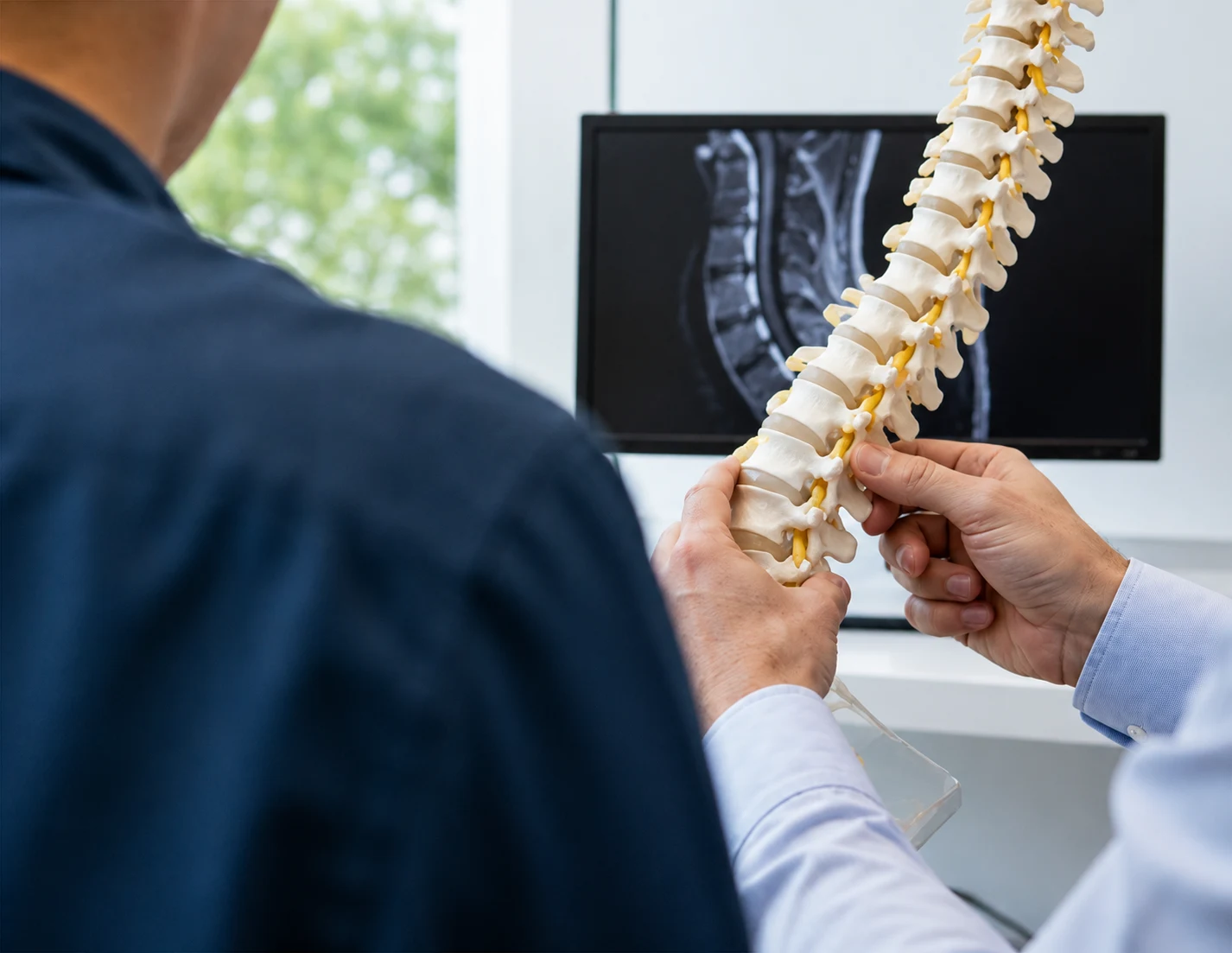
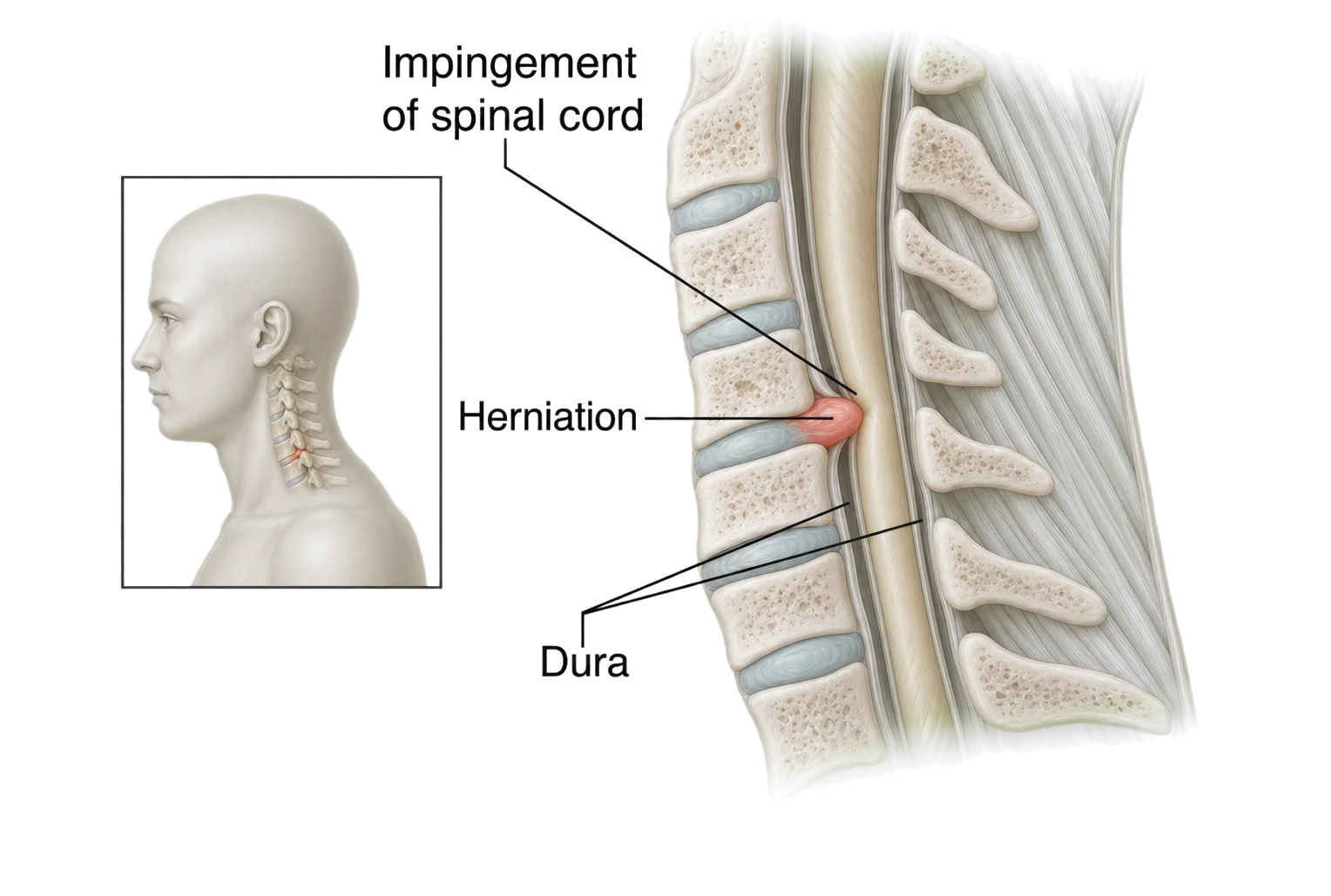
Myelopathy refers to dysfunction of the spinal cord, most commonly caused by compression within the spinal canal. It often occurs in the cervical spine, although it can affect other parts of the spine.
The spinal cord carries messages between the brain and the rest of the body. When it becomes compressed, these signals can be disrupted, leading to problems with walking, balance, coordination, hand dexterity, sensation, and strength. Myelopathy is potentially serious because untreated spinal cord compression can lead to permanent neurological deterioration.
Symptoms
Common symptoms of Myelopathy
Hover your cursor over a symptom above to learn more.
Difficulty Walking
Hand Clumsiness
Weakness
Numbness
Tingling
Balance Problems
Bladder Symptoms

When to Seek Urgent Care
Know the Warning Signs
Seek prompt medical assessment if you experience:
- Progressive weakness
- Increasing difficulty walking
- Worsening balance or coordination
- Loss of hand function or dexterity
- Changes in bladder or bowel control
These symptoms may indicate worsening spinal cord compression and should not be ignored.
For emergencies, call 000 or attend your nearest Emergency Department.
Assessment & Imaging
How is it diagnosed?
Diagnosis begins with a detailed neurological examination to assess strength, sensation, reflexes, balance, and coordination. MRI or CT scans are used to identify the cause and severity of spinal cord compression.
Treatment
Treatment Options
Treatment is based on your symptoms, examination findings, imaging, and how the condition affects your day-to-day life.
In mild cases, careful monitoring and symptom management may be appropriate.
Treatment may include:
- Physiotherapy
- Exercise physiology
- Activity modification
- Pain-relieving medication
- Anti-inflammatory medication
Surgery is commonly recommended when there is significant spinal cord compression or progressive neurological deterioration.
Procedures may include:
- Cervical laminoplasty
- Cervical decompression surgery
Related Services
Our multidisciplinary team can support assessment, treatment, rehabilitation, and surgical care where appropriate.
Concerned About Myelopathy?
Early diagnosis and treatment can help prevent permanent neurological deterioration. Our multidisciplinary team provides comprehensive assessment and treatment for patients with suspected spinal cord compression.