
Carpal Tunnel Decompression
Carpal tunnel decompression is a procedure used to relieve pressure on the median nerve at the wrist. It is commonly performed for numbness, tingling, pain, or weakness in the hand caused by carpal tunnel syndrome.

Understanding the Procedure
What is Carpal Tunnel Decompression?
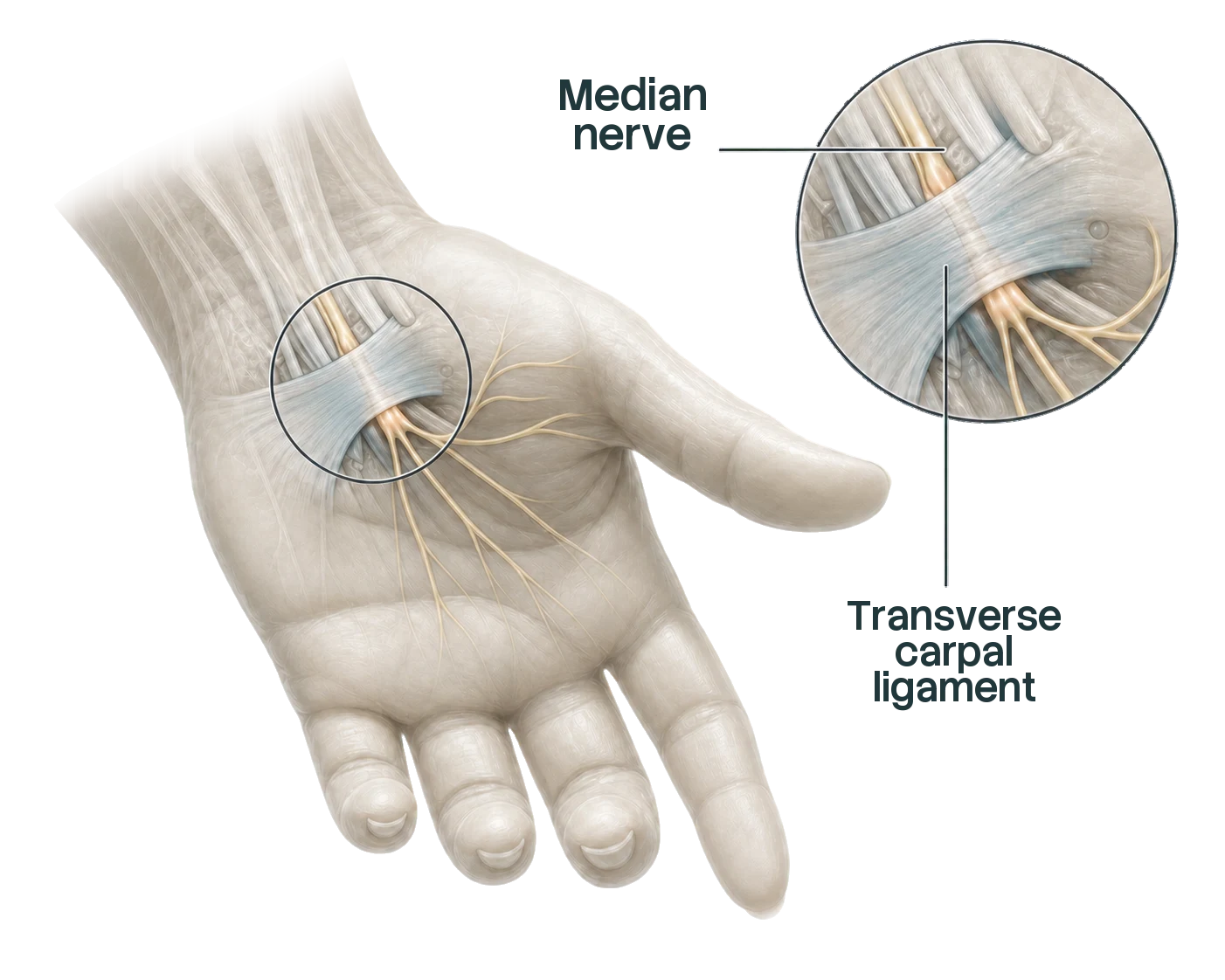
Carpal tunnel decompression is a procedure that releases pressure on the median nerve as it passes through the wrist.
The median nerve travels through a narrow passage called the carpal tunnel. In carpal tunnel syndrome, increased pressure within this space can compress the nerve and cause symptoms in the hand and fingers.
During surgery, the ligament forming the roof of the carpal tunnel is divided, creating more space for the nerve and relieving compression.
Understanding Carpal Tunnel Syndrome
Carpal tunnel syndrome occurs when the median nerve becomes compressed at the wrist.
Common symptoms include:
- Numbness or tingling in the thumb, index, middle, and ring fingers
- Hand pain, particularly at night
- Weakness of grip
- Difficulty with fine motor tasks
- Dropping objects unexpectedly
Symptoms often develop gradually and may worsen over time if nerve compression persists.
Indications
When is this Procedure Recommended?
Carpal tunnel decompression may be recommended when symptoms are affecting daily activities or when there is evidence of significant nerve compression.
Common reasons include:
- Persistent numbness or tingling
- Night-time hand pain
- Weakness of the hand or thumb
- Failure of non-surgical treatment
- Abnormal nerve conduction studies
- Progressive symptoms
The Procedure
What Happens During Surgery?
- A small incision is made in the palm or wrist.
- The carpal tunnel ligament is identified.
- The ligament is carefully divided to create more space for the median nerve.
- Pressure on the nerve is relieved.
- The wound is closed and a dressing is applied.
- Most procedures take approximately 20–30 minutes.
Related Conditions
Benefits
Potential Benefits
The goal of surgery is to relieve pressure on the median nerve and prevent ongoing nerve damage.
Potential benefits include:
- Relief of numbness and tingling
- Reduction in hand pain
- Improved sleep
- Improved grip strength
- Improved hand function
- Prevention of further nerve deterioration
Recovery varies depending on the severity and duration of nerve compression before surgery.
After the procedure
Recovery After Surgery
Carpal tunnel decompression is usually performed as a day procedure and most patients return home on the same day.
Some soreness around the incision and palm is expected during the early recovery period and usually improves over the first few weeks.
Gentle finger movement is encouraged immediately after surgery. Heavy gripping, lifting, and repetitive hand activities should be avoided until healing has progressed.
Most patients do not require formal physiotherapy. Hand exercises may be recommended to improve movement and function during recovery.
Driving can usually resume once pain is controlled and you can safely control a vehicle.
Many patients return to office-based work within 1–2 weeks. More physically demanding occupations may require additional time.
Follow-up appointments are usually scheduled within 1–2 weeks after surgery.
Potential Complications
Risks and Complications
All surgery carries risks. Potential complications include:
- Infection
- Bleeding
- Delayed wound healing
- Persistent numbness or weakness
- Nerve injury
- Scar tenderness
- Recurrence of symptoms
- Ongoing hand discomfort
Your surgeon will discuss risks relevant to your individual circumstances.
Considering Treatment for Carpal Tunnel Syndrome?
Our team can help determine whether surgery is appropriate and discuss all available treatment options.