Disc Herniation
Disc herniation can cause neck pain, back pain, arm or leg pain, numbness, tingling, or weakness when a spinal nerve becomes irritated or compressed.
Understanding the condition
What is a Disc Herniation?
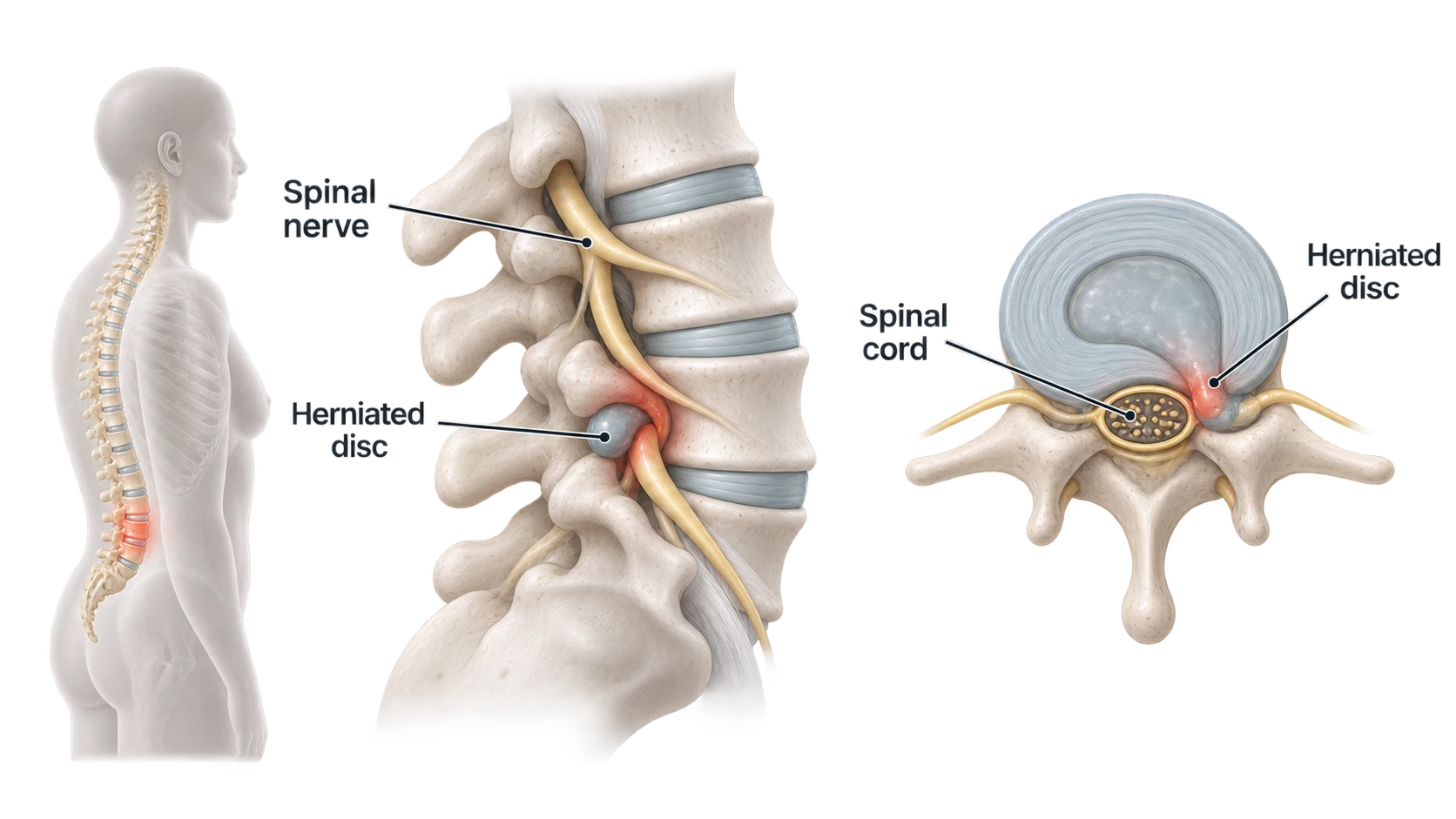
The spine is made up of bones called vertebrae, separated by discs that act as cushions and shock absorbers. A disc herniation occurs when the outer layer of a disc weakens or tears, allowing the inner disc material to bulge or protrude outward.
This may irritate or compress nearby nerves, causing pain or neurological symptoms in the neck, back, arms, or legs. Disc herniations most commonly occur in the lower back or neck and may develop gradually through age-related changes or following lifting, twisting, or injury.
Symptoms
Common symptoms of a Disc Herniation
Hover your cursor over a symptom above to learn more.
Back or Neck Pain
Arm or Leg Pain
Numbness
Tingling
Weakness
Difficulty Walking

When to Seek Urgent Care
Know the Warning Signs
These symptoms may indicate significant nerve compression requiring urgent assessment.
Seek urgent medical advice if you experience:
- Loss of bladder or bowel control
- Progressive weakness in an arm or leg
- Foot drop
- Rapid deterioration in walking ability
For emergencies, call 000 or attend your nearest Emergency Department.
Assessment & Imaging
How is it diagnosed?
Diagnosis begins with a detailed history and physical examination. MRI or CT scans are often used to confirm the diagnosis, identify the affected nerve, and assess the severity of compression.
Treatment
Treatment Options
Treatment is based on your symptoms, examination findings, imaging, and how the condition affects your day-to-day life.
Most patients improve without surgery. Treatment may include:
- Physiotherapy
- Exercise physiology
- Activity modification
- Pain-relieving medication
- Anti-inflammatory medication
- Image-guided spinal injections
Surgery may be considered when symptoms are severe, persistent, or associated with neurological deficits.
Procedures may include:
- Lumbar microdiscectomy
- Cervical microdiscectomy
- Decompression surgery
Related Services
Our multidisciplinary team can support assessment, treatment, rehabilitation, and surgical care where appropriate.
Concerned About Disc Herniation?
Our multidisciplinary team provides comprehensive assessment and treatment for patients with neck pain, back pain, sciatica, and nerve compression.