
Carpal Tunnel Syndrome
Carpal tunnel syndrome can cause numbness, tingling, pain, weakness, and clumsiness in the hand and fingers.

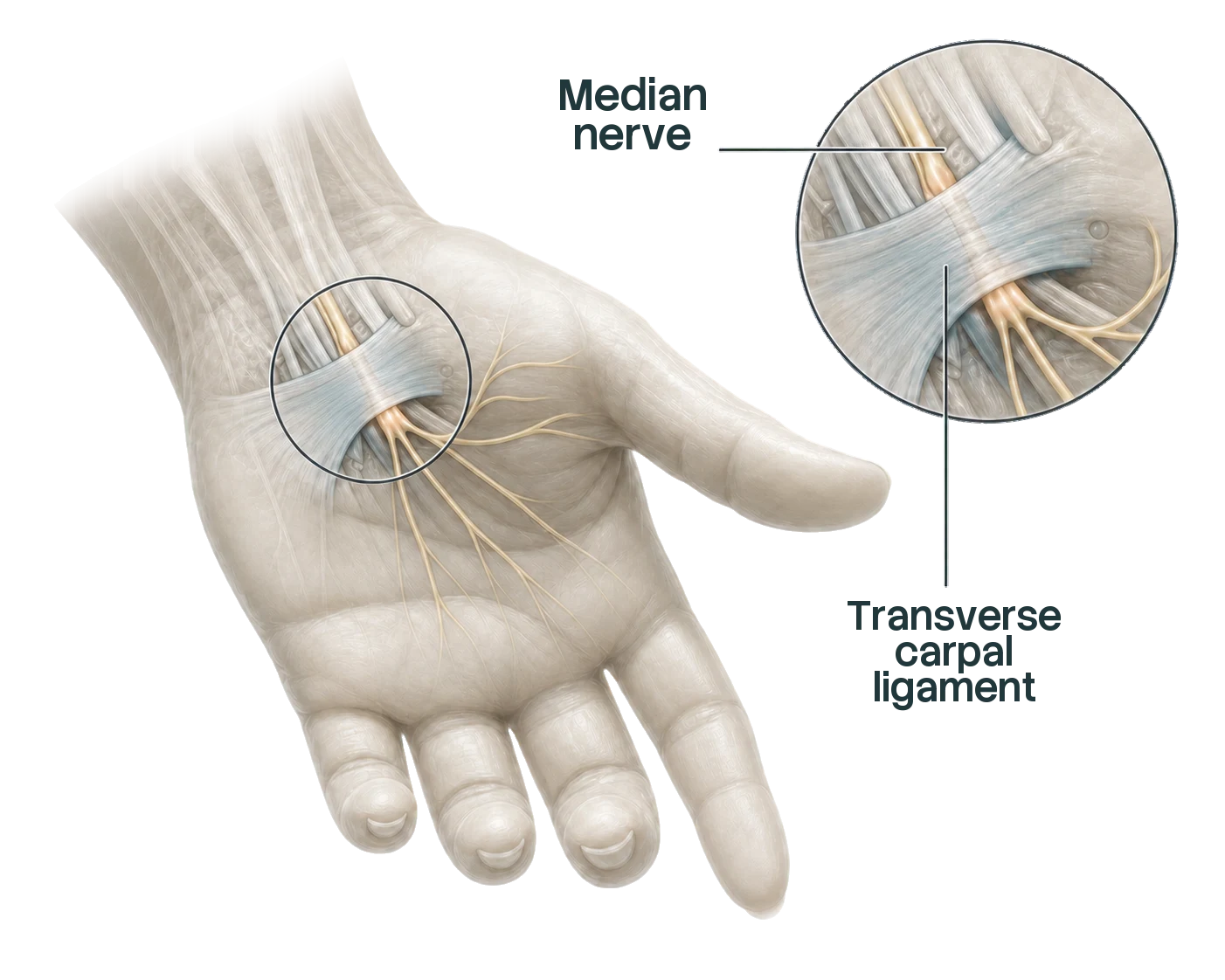
Understanding the condition
What is Carpal Tunnel Syndrome?
Carpal tunnel syndrome occurs when the median nerve becomes compressed as it passes through the carpal tunnel, a narrow passageway in the wrist.
The median nerve provides sensation to the thumb, index finger, middle finger, and part of the ring finger. It also helps control some of the small muscles of the hand. When pressure builds within the carpal tunnel, the nerve can become irritated, leading to numbness, tingling, pain, weakness, and reduced hand function.
Symptoms
Common symptoms of Carpal Tunnel Syndrome
Hover your cursor over a symptom above to learn more.
Numbness
Tingling
Hand Pain
Night Symptoms
Weakness
Hand Clumsiness
Dropping Objects

When to Seek Urgent Care
Know the Warning Signs
Seek prompt medical assessment if you experience:
- Progressive weakness of the hand
- Increasing difficulty using your fingers
- Significant loss of grip strength
These symptoms may indicate more advanced nerve compression.
For emergencies, call 000 or attend your nearest Emergency Department.
Assessment & Imaging
How is it diagnosed?
Diagnosis is usually based on symptoms and examination findings. Nerve conduction studies are commonly used to confirm the diagnosis and assess the severity of nerve compression.
Treatment
Treatment Options
Treatment is based on your symptoms, examination findings, imaging, and how the condition affects your day-to-day life.
Many patients improve with conservative treatment.
Treatment may include:
- Activity modification
- Wrist splinting
- Physiotherapy
- Anti-inflammatory medication
- Corticosteroid injections
Surgery may be recommended when symptoms are severe, progressive, or fail to respond to conservative treatment.
Treatment options may include:
Related Services
Our multidisciplinary team can support assessment, treatment, rehabilitation, and surgical care where appropriate.
Concerned About Carpal Tunnel Syndrome?
Our team provides comprehensive assessment and treatment for patients experiencing hand numbness, tingling, weakness, and other peripheral nerve conditions.