Lumbar Decompression
A lumbar decompression is a spinal procedure used to relieve pressure on nerves in the lower back. It is commonly performed for lumbar spinal stenosis when narrowing of the spinal canal causes leg pain, numbness, weakness, or difficulty walking.
Understanding the Procedure
What Is a Lumbar Decompression?
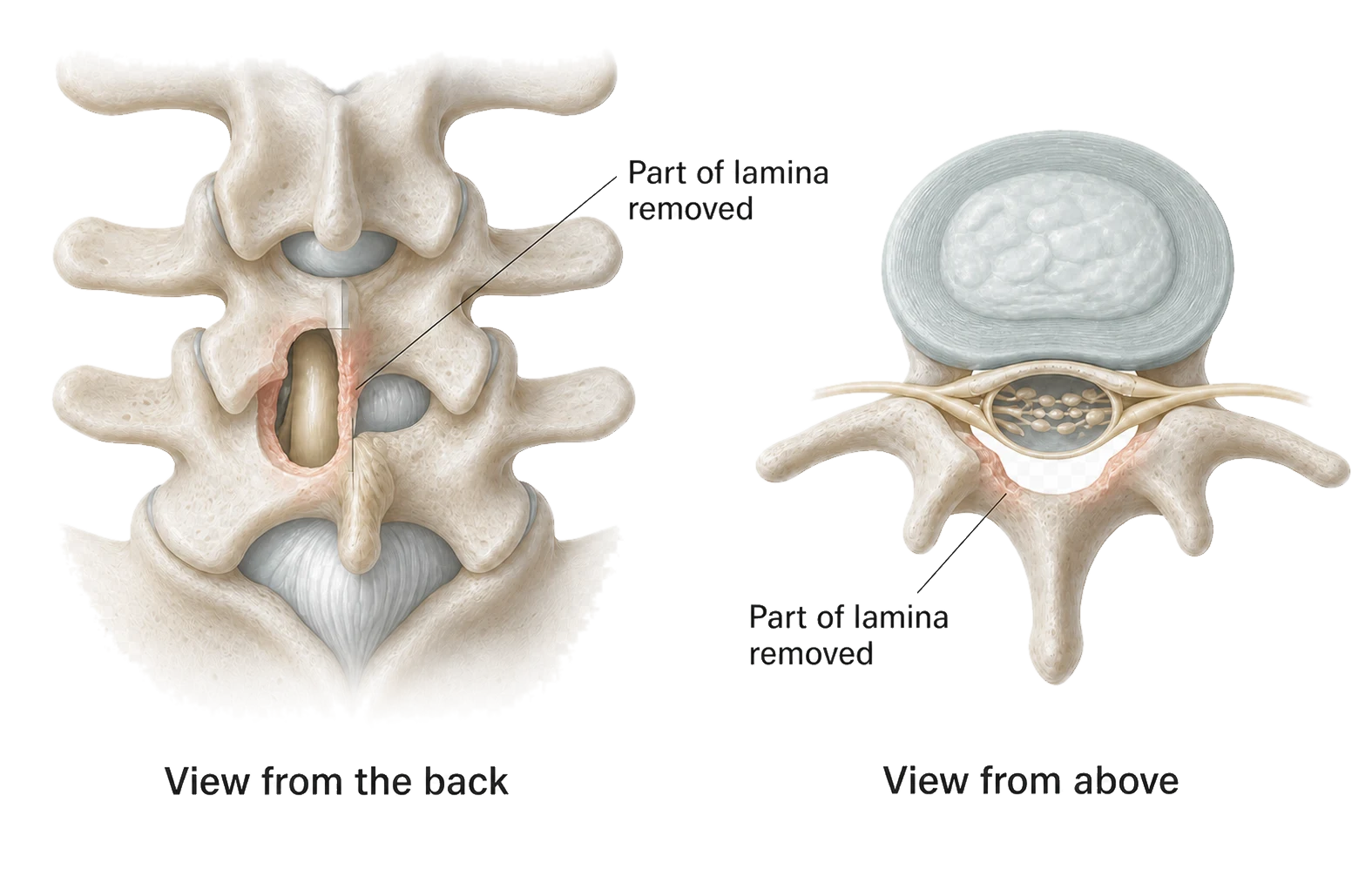
A lumbar decompression is a surgical procedure that creates more space around compressed nerves in the lower back.
As we age, changes such as arthritis, thickened ligaments, and enlargement of joints can gradually narrow the spinal canal. This narrowing is known as spinal stenosis.
During surgery, small amounts of bone and soft tissue are removed to relieve pressure on the nerves while maintaining as much spinal stability as possible.
Indications
When is this Procedure Recommended?
A lumbar decompression may be recommended when spinal stenosis is causing significant symptoms that have not improved with non-surgical treatment.
Common reasons include:
- Lumbar spinal stenosis
- Leg pain when standing or walking
- Neurogenic claudication
- Numbness or tingling in the legs
- Weakness in the legs
- Reduced walking tolerance
- Progressive neurological symptoms
The Procedure
What Happens During Surgery?
- A small incision is made in the lower back.
- The affected spinal levels are identified.
- Small amounts of bone, ligament, or other tissue causing nerve compression are removed.
- The spinal canal is enlarged to create additional space around the nerves.
- Pressure is relieved from the affected nerves.
- The wound is closed and a dressing is applied.
- Most procedures take approximately 1–3 hours.
Related Conditions
Benefits
Potential Benefits
The goal of surgery is to relieve nerve compression and improve mobility and function.
Potential benefits include:
- Reduced leg pain
- Improved walking tolerance
- Improvement in numbness and tingling
- Improved balance and mobility
Recovery varies between individuals and depends partly on the severity and duration of nerve compression before surgery.
After the procedure
Recovery After Surgery
Most patients spend 1–2 nights in hospital and return home once they are walking comfortably and pain is controlled.
Some discomfort around the incision is expected during the first few weeks and is usually managed with oral pain medication. Improvement in leg symptoms may occur soon after surgery, although recovery varies between individuals.
Walking is encouraged from the first day after surgery. Regular walking is an important part of recovery and helps gradually rebuild strength and endurance.
A consultation with a spine physiotherapist before surgery can help prepare for recovery. Physiotherapy is often commenced around 4 weeks after surgery and focuses on mobility, strength, confidence, and return to normal activity.
Driving can usually resume once pain is controlled and clearance has been provided by your surgeon.
Many patients return to office-based work within 2–4 weeks. More physically demanding occupations may require additional time.
Follow-up appointments are usually scheduled at 2 weeks and 6 weeks after surgery.
Potential Complications
Risks and Complications
All surgery carries risks. Potential complications include:
- Infection
- Bleeding
- Blood clots
- Anaesthetic complications
- Persistent symptoms
- Nerve injury
- Cerebrospinal fluid leak
- Recurrent nerve compression
Your surgeon will discuss risks relevant to your individual circumstances.
Considering Surgery for Lumbar Spinal Stenosis?
Our team can help determine whether surgery is appropriate and discuss all available treatment options.