Cervical Laminoplasty
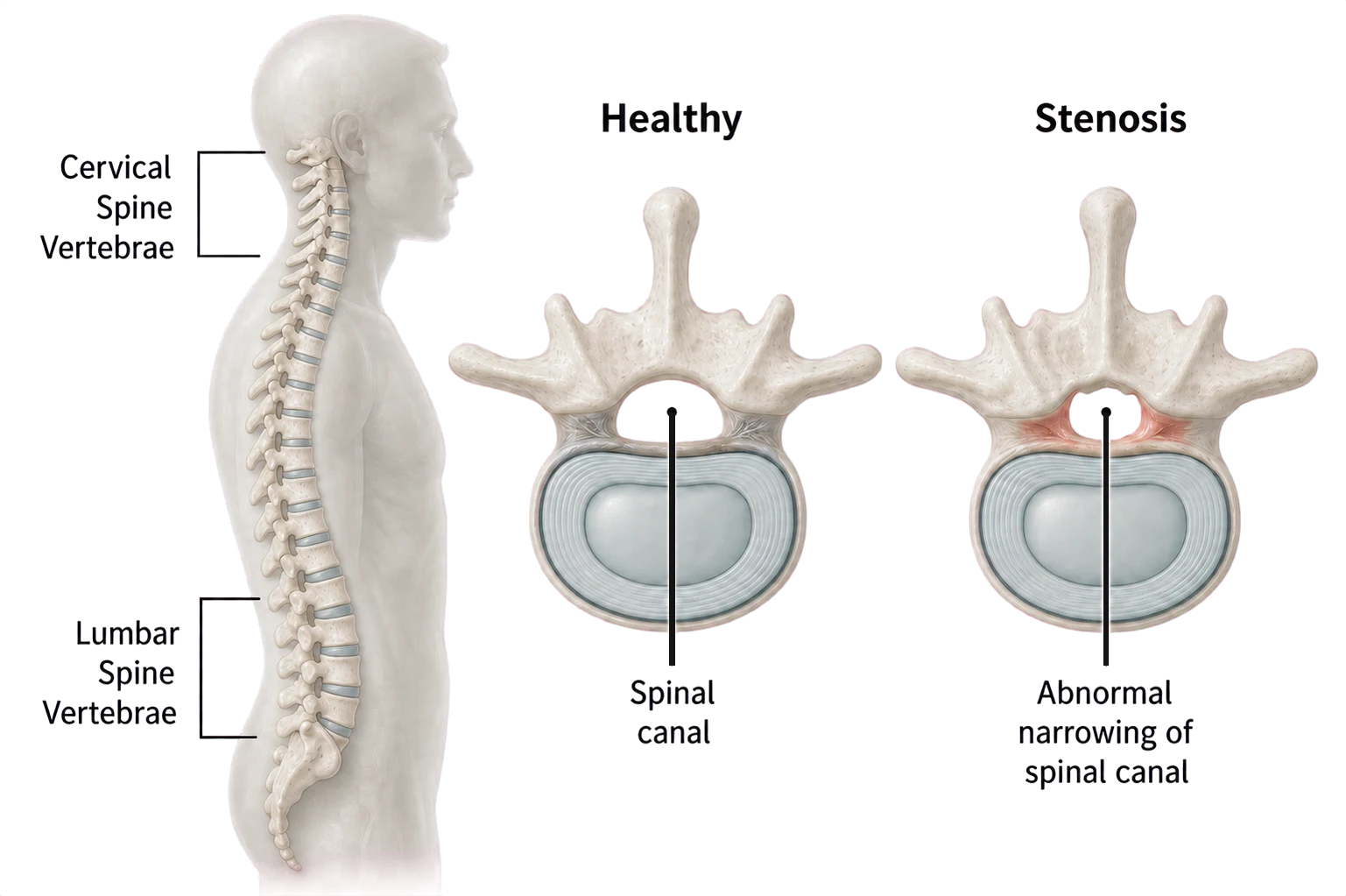
A cervical laminoplasty is a spinal decompression procedure used to create more space for the spinal cord in the neck. It is commonly performed for cervical myelopathy and spinal stenosis when pressure on the spinal cord is causing symptoms such as balance difficulties, hand clumsiness, numbness, or weakness.
Understanding the Procedure
What is Cervical Laminoplasty?
A cervical laminoplasty is a procedure that enlarges the spinal canal in the neck to relieve pressure on the spinal cord.
Rather than removing large sections of bone or performing a spinal fusion, the surgeon reshapes and repositions the lamina (the bony roof of the spinal canal) to create additional space around the spinal cord.
The procedure is performed through an incision in the back of the neck and is designed to preserve spinal stability and movement while relieving compression.
Indications
When is this Procedure Recommended?
A cervical laminoplasty may be recommended when pressure on the spinal cord is causing progressive neurological symptoms.
Common reasons include:
- Cervical myelopathy
- Cervical spinal stenosis
- Difficulty with balance or walking
- Loss of hand dexterity
- Weakness in the arms or legs
- Progressive spinal cord compression identified on MRI
The Procedure
What Happens During Surgery?
- A midline incision is made at the back of the neck.
- The muscles are carefully moved aside to expose the cervical spine.
- The lamina is partially cut and hinged open to enlarge the spinal canal.
- Small plates or fixation devices are used to hold the lamina in position.
- Pressure on the spinal cord is relieved.
- The wound is closed and a dressing is applied.
- Most procedures take approximately 2–4 hours.
Related Conditions
Benefits
Potential Benefits
The goal of surgery is to prevent further spinal cord injury and improve neurological function where possible.
Potential benefits include:
- Reduced pressure on the spinal cord
- Improvement in balance and walking
- Improved hand function and dexterity
- Reduced numbness or weakness
- Prevention of further neurological deterioration
Recovery varies between individuals and depends partly on the severity and duration of spinal cord compression before surgery.
After the procedure
Recovery After Surgery
Most patients spend 2–3 nights in hospital and return home once they are walking safely and pain is controlled.
Some neck pain and muscular stiffness are expected during the early recovery period. Symptoms generally improve over the first few weeks as healing progresses.
Walking is encouraged from the first day after surgery. Light activity is beneficial, however heavy lifting and strenuous activities should be avoided during the early stages of recovery.
A consultation with a spine physiotherapist before surgery can help prepare for recovery. Physiotherapy is often commenced around 6-8 weeks after surgery and focuses on mobility, posture, strength, confidence, and return to normal activity.
Driving can usually resume once pain is controlled, neck movement is adequate, and clearance has been provided by your surgeon.
Many patients return to office-based work within 4–6 weeks. More physically demanding occupations may require additional time.
Follow-up appointments are usually scheduled at 2 weeks and 6 weeks after surgery, with additional follow-up arranged if required.
Potential Complications
Risks and Complications
All surgery carries risks. Potential complications include:
- Infection
- Bleeding
- Blood clots
- Anaesthetic complications
- Persistent symptoms
- Temporary worsening of neurological symptoms
- Nerve injury
- Spinal cord injury
- Ongoing neck pain or stiffness
- C5 nerve palsy (weakness affecting the shoulder or arm)
Your surgeon will discuss risks relevant to your individual circumstances.
Considering Surgery for Cervical Myelopathy or Spinal Stenosis?
Our team can help determine whether surgery is appropriate and discuss all available treatment options.