
Ventriculoperitoneal (VP) Shunt
A ventriculoperitoneal (VP) shunt is a surgical procedure used to treat hydrocephalus, a condition where excess fluid accumulates within the brain. The shunt diverts fluid away from the brain to reduce pressure and help improve symptoms.

Understanding the Procedure
What is a VP Shunt?
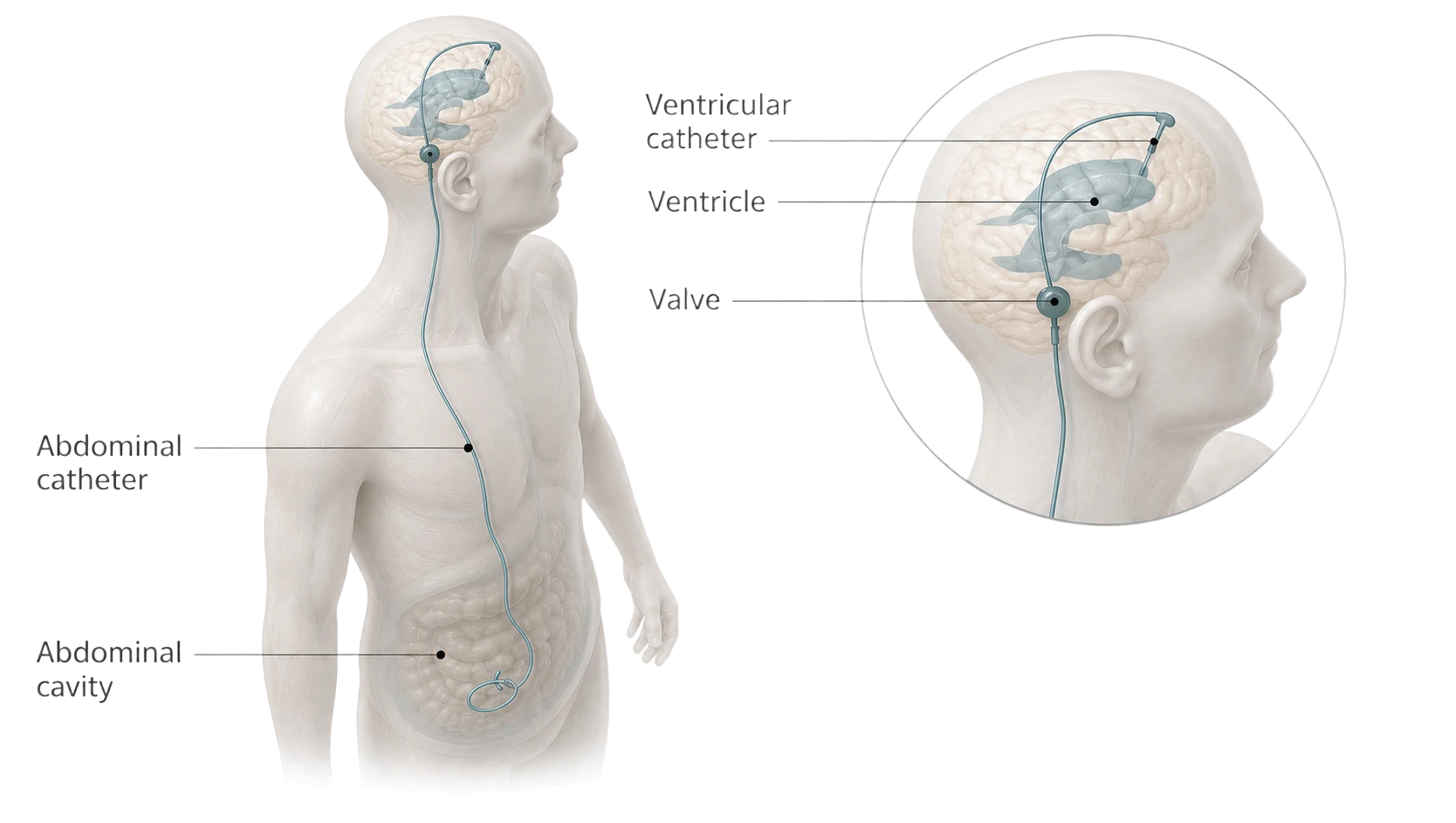
A VP shunt is a thin tube and valve system that drains excess cerebrospinal fluid (CSF) from the brain into the abdominal cavity, where it is naturally absorbed by the body.
The system consists of:
- A catheter placed within the fluid-filled spaces of the brain (ventricles)
- A valve that regulates fluid drainage
- A second catheter that carries fluid under the skin to the abdomen
VP shunts are the most commonly used surgical treatment for hydrocephalus.
Understanding Hydrocephalus
Hydrocephalus occurs when cerebrospinal fluid (CSF) builds up within the ventricles of the brain.
This may occur because:
- CSF is not draining properly
- CSF absorption is impaired
- CSF flow is blocked
Hydrocephalus can occur at any age and may develop as a result of:
- Normal pressure hydrocephalus (NPH)
- Brain tumours
- Brain haemorrhage
- Infection
- Previous brain surgery
- Congenital conditions
Symptoms vary depending on the cause and age of the patient but may include headaches, balance difficulties, walking problems, memory changes, urinary urgency, nausea, or visual disturbance.
Indications
When is this Procedure Recommended?
A VP shunt may be recommended when hydrocephalus is causing symptoms and excess fluid needs to be diverted away from the brain.
Common reasons include:
- Normal pressure hydrocephalus (NPH)
- Progressive symptoms related to increased intracranial pressure
The Procedure
What Happens During Surgery?
- A small incision is made in the scalp.
- A small opening is created in the skull.
- A catheter is inserted into one of the brain's ventricles.
- A valve is connected to regulate fluid drainage.
- A second catheter is tunnelled under the skin from the head to the abdomen.
- The catheter is placed into the abdominal cavity where the fluid can be absorbed naturally.
- The system is tested and the wounds are closed.
- Most procedures take approximately 1–2 hours.
Related Conditions
Benefits
Potential Benefits
The goal of surgery is to reduce pressure within the brain and improve symptoms caused by hydrocephalus.
Potential benefits include:
- Improved walking and balance
- Improvement in memory and thinking
- Improved bladder control
- Reduction in headaches
- Prevention of progressive neurological deterioration
The degree of improvement varies between individuals and depends on the cause and duration of hydrocephalus before treatment.
After the procedure
Recovery After Surgery
Most patients spend 2–4 nights in hospital following surgery. The exact length of stay depends on the underlying condition and individual recovery.
Some discomfort around the scalp, neck, or abdominal incisions is common during the early recovery period and usually improves over the first few weeks.
Walking and gentle activity are encouraged soon after surgery. Recovery should progress gradually according to your surgeon's recommendations.
Some patients benefit from physiotherapy or rehabilitation services, particularly when hydrocephalus has affected walking, balance, or mobility.
Many patients with normal pressure hydrocephalus (NPH) notice improvements in walking and balance within days of surgery. Improvements in memory, thinking, and bladder symptoms are often more gradual and may continue over several months.
Driving restrictions vary depending on the underlying condition and symptoms. Your surgeon will provide individual advice.
Return to work depends on the underlying diagnosis, recovery, and the type of work performed.
Follow-up appointments are usually scheduled within the first few weeks after surgery. Ongoing monitoring is important to ensure the shunt is functioning correctly.
Potential Complications
Risks and Complications
All surgery carries risks. Potential complications include:
- Infection
- Bleeding
- Blood clots
- Anaesthetic complications
- Shunt blockage
- Shunt infection
- Over-drainage or under-drainage of fluid
- Need for shunt adjustment or revision
- Catheter malfunction
- Persistent symptoms
VP shunts are designed to function long-term, however some patients may require future adjustment or revision of the system.
Your surgeon will discuss risks relevant to your individual circumstances.
Seeking Advice About Hydrocephalus?
Our team can help explain your diagnosis, discuss treatment options, and determine whether a VP shunt is appropriate.