
Hydrocephalus
Hydrocephalus can cause headaches, walking difficulties, memory problems, vision changes, drowsiness, or changes in bladder control.

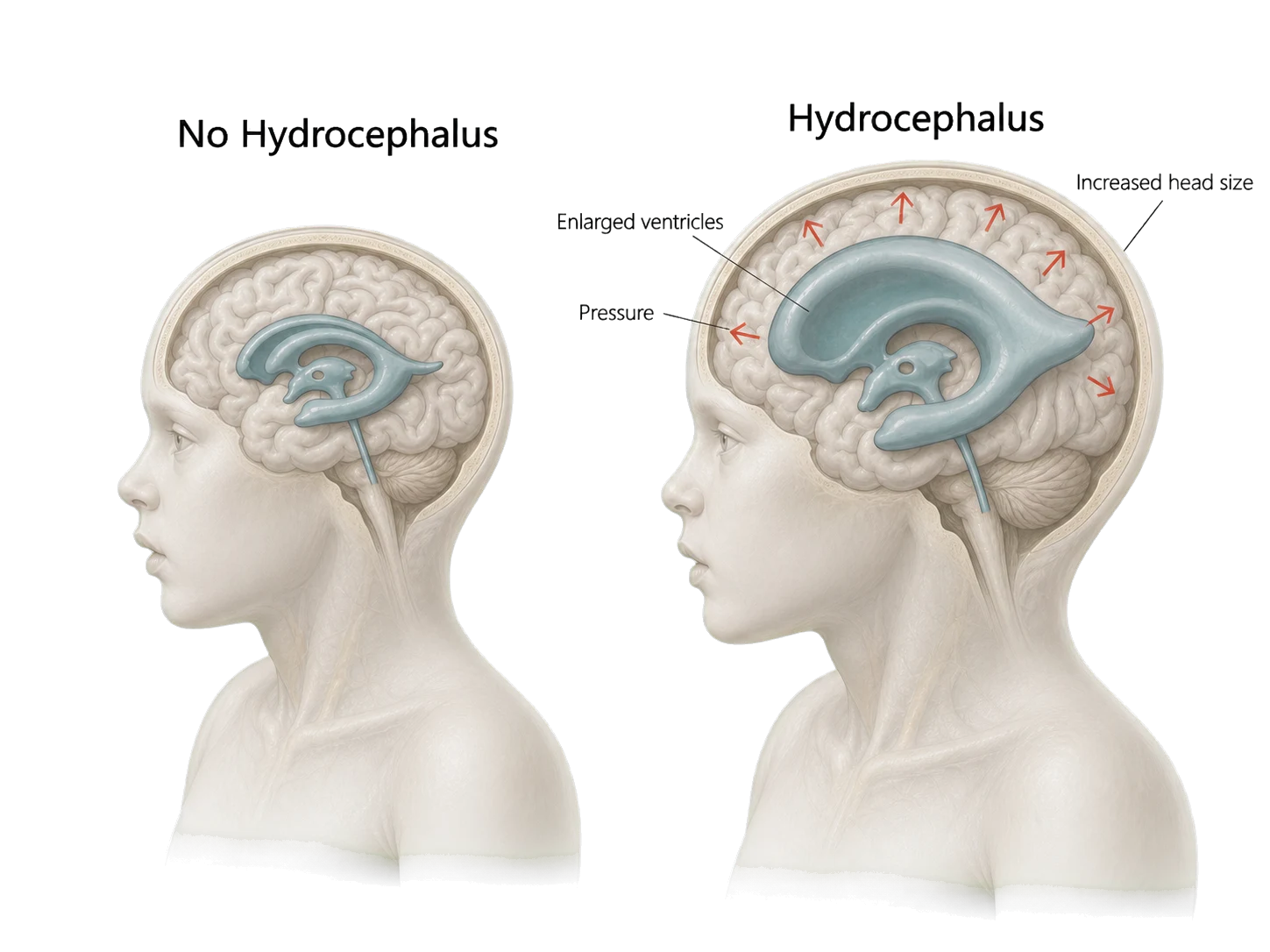
Understanding the condition
What Is Hydrocephalus?
Hydrocephalus is a condition caused by an abnormal build-up of cerebrospinal fluid within the brain. This fluid normally circulates around the brain and spinal cord before being reabsorbed into the bloodstream.
When cerebrospinal fluid cannot drain or be absorbed properly, it can accumulate within the ventricles of the brain. This may increase pressure on surrounding brain tissue and interfere with neurological function. Hydrocephalus can affect infants, children, and adults, and may develop gradually or suddenly.
Symptoms
Common symptoms of Hydrocephalus
Hover your cursor over a symptom above to learn more.
Headaches
Nausea and Vomiting
Difficulty Walking
Memory Problems
Urinary Incontinence
Vision Changes
Drowsiness

When to Seek Urgent Care
Know the Warning Signs
Seek urgent medical attention if you experience:
- Severe or worsening headaches
- Repeated vomiting
- Increasing drowsiness
- Confusion or altered consciousness
- Sudden deterioration in walking ability
These symptoms may indicate increasing pressure within the brain and require urgent assessment.
For emergencies, call 000 or attend your nearest Emergency Department.
Assessment & Imaging
How is it diagnosed?
Hydrocephalus is usually diagnosed using brain imaging, which demonstrates enlargement of the ventricles. Clinical assessment helps determine whether symptoms are related to the hydrocephalus and whether treatment is likely to be beneficial.
Treatment
Treatment Options
Treatment is based on your symptoms, examination findings, imaging, and how the condition affects your day-to-day life.
Some patients may require observation and ongoing monitoring before treatment is recommended.
Management may include:
- Repeat imaging
- Specialist neurosurgical review
The aim of treatment is to restore normal cerebrospinal fluid circulation and reduce pressure on the brain.
Treatment options may include:
- Ventriculoperitoneal (VP) shunt
- Endoscopic third ventriculostomy (ETV)
Related Services
Our multidisciplinary team can support assessment, treatment, rehabilitation, and surgical care where appropriate.
Concerned About Hydrocephalus?
Our team provides comprehensive assessment and treatment for patients with hydrocephalus and other complex neurosurgical conditions.