Anterior Lumbar Interbody Fusion (ALIF)
An anterior lumbar interbody fusion (ALIF) is a spinal fusion procedure used to stabilise the lower back and restore disc height. It is commonly performed for conditions such as degenerative disc disease, spondylolisthesis, recurrent disc herniation, and spinal instability.
Understanding the Procedure
What is an ALIF?
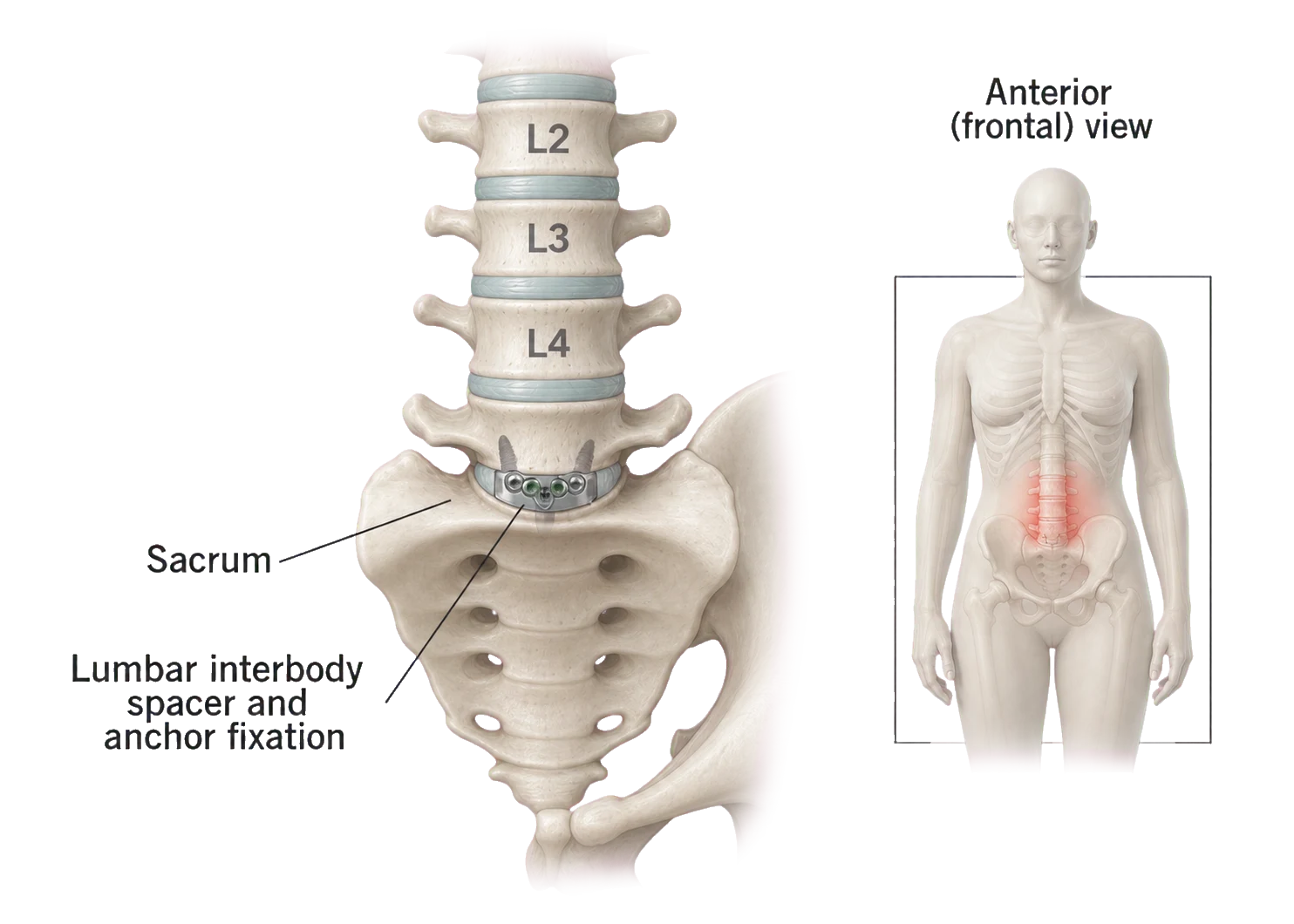
An anterior lumbar interbody fusion (ALIF) is a procedure performed through the front of the abdomen to access the lumbar spine.
The damaged disc is removed and replaced with an implant packed with bone graft. This restores disc height, relieves pressure on nearby nerves, and provides stability while the vertebrae fuse together.
Accessing the spine from the front allows placement of a larger implant and avoids disruption of the muscles in the back.
An ALIF is often coupled with a posterior decompression procedure, performed to relieve pressure on the affected nerves before the fusion.
A Collaborative Surgical Approach
At Sydney Spine Institute, ALIF procedures are performed jointly by Associate Professor James van Gelder and experienced vascular surgeon Dr John Crozier.
Dr Crozier performs the abdominal exposure required to safely access the lumbar spine, while Associate Professor van Gelder performs the spinal reconstruction and fusion.
This collaborative approach combines the expertise of two specialist surgeons and helps minimise the risks associated with operating around major blood vessels and abdominal structures. Dr Crozier has extensive experience in anterior spinal exposure procedures and is an important part of the surgical team.
Indications
When is this Procedure Recommended?
An ALIF may be recommended when instability or degeneration of the lumbar spine is causing ongoing symptoms that have not improved with non-surgical treatment.
Common reasons include:
- Degenerative disc disease
- Spondylolisthesis
- Lumbar instability
- Recurrent disc herniation
- Loss of disc height
- Spinal deformity
The Procedure
What Happens During Surgery?
- An incision is made in the lower abdomen.
- The affected disc is identified and removed.
- The disc space is prepared for reconstruction.
- An implant packed with bone graft is inserted into the disc space.
- The implant restores disc height and spinal alignment.
- Additional screws or fixation is used to provide further stability.
- The vertebrae gradually fuse together during the healing process.
- The wound is closed and a dressing is applied.
- Most procedures take approximately 3–5 hours.
Related Conditions
Benefits
Potential Benefits
The goal of surgery is to restore spinal stability, improve alignment, and reduce symptoms caused by disc degeneration or instability.
Potential benefits include:
- Improved spinal stability
- Restoration of disc height
- Relief of nerve compression
- Reduction in leg symptoms
- Improvement in back pain related to instability
- Improved function and quality of life
Recovery varies between individuals and depends partly on the severity of the underlying condition and the extent of surgery performed.
After the procedure
Recovery After Surgery
Most patients spend approximately 5 nights in hospital and return home once they are walking comfortably and pain is controlled.
Some discomfort around the abdominal incision and lower back is expected during the early recovery period. Many patients notice improvement in leg symptoms soon after surgery, although recovery continues over several months.
Walking is encouraged from the first day after surgery. Heavy lifting, bending, twisting, and strenuous activities should be avoided while the fusion is healing.
A consultation with a spine physiotherapist before surgery can help prepare for recovery. Physiotherapy is often commenced around 8 weeks after surgery and focuses on mobility, strength, endurance, confidence, and return to normal activity.
Driving can usually resume once pain is controlled and clearance has been provided by your surgeon.
Many patients return to office-based work within 6–8 weeks. More physically demanding occupations may require additional time.
Follow-up appointments are usually scheduled at 2 weeks and 6 weeks after surgery, with additional monthly appointments arranged to monitor progress of fusion.
Potential Complications
Risks and Complications
All surgery carries risks. Potential complications include:
- Infection
- Bleeding
- Blood clots
- Anaesthetic complications
- Failed fusion (non-union)
- Nerve injury
- Blood vessel injury
- Injury to abdominal structures
- Persistent symptoms
- Implant-related complications
- Retrograde ejaculation
Your surgeon will discuss risks relevant to your individual circumstances.
Considering Surgery for Degenerative Disc Disease or Spondylolisthesis?
Our team can help determine whether surgery is appropriate and discuss all available treatment options.